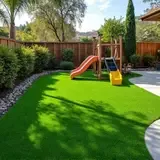
Artificial turf lawn over a compacted open-graded stone base in Phoenix, AZ

Artificial Turf in Phoenix, AZ

Phoenix homeowners use this free matching service to get itemised artificial turf quotes from local pros: the excavation, the compacted stone base, the turf, the infill and the drainage plan that decides whether it still looks new in year ten.

Get Matched With a Local Pro

Tell us what you need and we route it to local artificial turf installers who do this work. Free, no obligation. Most homeowners around Phoenix, AZ come to us looking into putting green installation; here is how the process runs and what it costs.

Tell Us What You Need — We Will Handle the Rest

Free matching with local artificial turf installers in Phoenix. No obligation, no pressure.

We do not sell or publish your details. Installer routing only.

By submitting this form you agree we may contact you about this request by phone or email. Text messages are sent only if you tick the box above; message frequency varies, message and data rates may apply. Reply HELP for help or STOP to opt out. Privacy Policy.

Services

Residential Turf

A residential turf installation is a drainage and sub-base project that ends in a lawn, and the published numbers only make sense once you know which of the two you are paying for.

Pet Turf

Pet turf is judged by what happens underneath it, not by how the blades look, and the published specification is a deeper, fully draining base plus an infill that changes the chemistry of the yard.

Playground Turf

A playground surface is bought for one number - the fall height it is rated to - and everything else about the installation serves that number.

Putting Greens

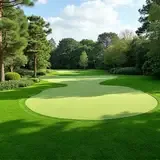
A backyard putting green is a shaped base with a surface stretched over it, and the published specification starts with the speed number the surface has to deliver.

Commercial Turf

Commercial turf is published as a high-traffic, high-drainage surface, and the two numbers that decide whether it works are the annual hours it is rated for and how fast the base sheds water.

What artificial turf costs in Phoenix

Published Phoenix price bands
JobPublished range
Complete professional installation5 - 15 per square foot
Most common installed range8 - 15 per square foot
Basic residential turf, material only2 - 4 per square foot
Premium pet-grade or high-face-weight turf, material only4 - 8 per square foot
Removing the existing lawn and hauling the debris, added to the installation1 - 3 per square foot
Excavation and a compacted crushed-rock base, added to the installation1 - 3 per square foot
Typical backyard, 500 square feet4,000 - 7,500
Basic turf with silica sand infill$4.00 per square foot
Rapid-drain turf with zeolite infill$6.00 per square foot
Standard installation labour$5.50 per square foot
Pet-system installation labour$6.50 per square foot
Class II road base aggregate$40 per ton
No. 57 clean washed angular stone$48 per ton
Non-woven geotextile soil separator$0.45 per square foot
Engineered 500 sq ft model, standard system$4,970.00 ($9.94 per square foot)
Engineered 500 sq ft model, pet-proof system$6,827.00 ($13.65 per square foot)

Figures are the published bands from the turf source pack: 5 to 15 per square foot for a complete professional installation, with 8 to 15 the band most jobs land in. Removing an existing lawn and hauling the debris adds 1 to 3 per square foot and excavation with a compacted crushed-rock base adds another 1 to 3. Material alone runs 2 to 4 per square foot for basic residential turf and 4 to 8 for premium pet-grade or high-face-weight turf. A typical 500-square-foot backyard lands between 4,000 and 7,500, and the itemised model computes 4,970.00 (9.94 per square foot) for a standard 500 sq ft system against 6,827.00 (13.65 per square foot) for an engineered pet-proof one. Aggregate is 40 and 48 per ton for the two base materials and pet-spec labour is 6.50 per square foot against 5.50 standard.

What the desert does to artificial turf

Phoenix is a 110 F-plus summer metro with an extreme-UV load and a storm-peaked monsoon. The NWS Phoenix forecast office publishes daily probability tiers for the metro at 100, 105, 110 and 120 F and keeps a running yearly count of Phoenix days at or above 110 F (https://www.weather.gov/psr/heat, HTTP 200), and the monsoon season runs through September 30, bringing the dust storms (wind gusts 40-60 mph) and thunderstorms NWS calls the most dangerous weather period of the Southwest year (https://www.weather.gov/psr/MonsoonSafety, HTTP 200). Sun load is the second half of the exposure: on EPA's UV Index scale everything at 8 and above is 'very high to extreme', where EPA advises extra protection even outside of peak hours (https://www.epa.gov/sunsafety/uv-index-scale-0, HTTP 200). The practical consequences for artificial turf are that shade and heat/UV tolerance drive the surface, infill and base specification rather than looks, and that the usable season inverts: roughly October through May is the comfortable season for installation and use, while June through September is the survival season for both people and finishes.

Pet Urine Odor and Build-Up

Pet urine can discolor artificial turf and leave an odor that no hose-down shifts, and the reason is chemistry rather than hygiene.

Turf Drainage and Ponding

Poor drainage leads to standing water, odors, soft spots and turf damage, and the published material says where it comes from: usually the base preparation.

Turf Heat Retention

Artificial turf absorbs heat and becomes uncomfortably hot in direct sun, and from March through October in Phoenix that is the difference between a yard that gets used and one that gets looked at.

Turf Fading and Infill Compaction

UV exposure fades turf over time and heavy traffic compacts the infill, flattening the fibres - and these are two separate failures that get priced separately.

Turf Seams and Edges Lifting

Lifting seams and curling edges are usually installation problems - inadequate adhesive, or base preparation that was not good enough - and the repair restores a smooth, safe surface.

20 free tools, no sign-up

Twenty free tools: an artificial turf cost estimator, a base-depth and stone-quantity calculator, an infill selector, a drainage and slope checker, an HOA and permit checklist and a contractor question list - no sign-up.

Open all 20 tools →Build advisor

Areas we cover

Phoenix Scottsdale Chandler Gilbert Mesa Tempe Glendale

From the blog

Why Artificial Turf Smells Like Ammonia in Phoenix — and Why a Hose Cannot Fix It

What a Turf Installation Actually Involves in Phoenix, Start to Finish

How to Vet a Turf Installer in Phoenix: the Questions That Expose a Bad Base

Open-Graded or Dense-Graded: the Turf Base That Decides Drainage in Phoenix

The Pet-Urine Wash-Down Routine That Clears Turf Odour in Phoenix, AZ

All articles →

Frequently Asked Questions About Artificial Turf in Phoenix

The artificial turf questions Phoenix homeowners ask most.

how much does artificial turf cost in phoenix?+
Installed artificial turf is published at 8 to 15 per square foot, and a typical 500 square foot backyard is published at 4,000 to 7,500. A complete professional installation is budgeted at 5 to 15 per square foot, and the published models compute a standard 500 square foot project at 4,970 (9.94 per square foot) against 6,827 (13.65 per square foot) for a fully engineered pet-proof system. For comparison, natural grass is published at 0.50 to 2 per square foot for seed or sod upfront and xeriscape at 3 to 8 per square foot installed.
how much does chandler cost in phoenix?+
Costs depend on the scope of the job, the materials you choose and the condition of your property, so published averages are only a starting point. Every pro we match you with provides a written, itemised estimate before any work starts — compare at least two of them line by line, not just the total.
what does chandler include?+
Residential Turf in Chandler, AZ - local costs and what the job includes.
how long does chandler take in phoenix?+
A single residential job is usually done in a day or two; larger or custom work takes longer. The contractor confirms their own schedule in the written estimate, so you can compare timelines as well as prices before you commit.
do i need a permit for chandler in phoenix?+
Permit rules differ by municipality, so ask each contractor whether one is required for your job, who files it and what it costs — and get that answer in writing before work starts.
is artificial turf worth it in phoenix?+
For most Phoenix homeowners it comes down to how much you use the space and how long you plan to stay. Ask each contractor what the finished job includes, what maintenance it needs and what warranty covers it — then compare the quotes alongside the warranties rather than the headline price.
how do i choose a artificial turf company in phoenix?+
Check three things before you hire: proof of licence and insurance, a written itemised estimate, and a warranty you can read. Ask for two local references, and confirm the timeline in writing. We match you with up to three pre-vetted Phoenix companies so you can compare them side by side.
when should i replace artificial turf in phoenix?+
That depends on what you have now and what you want to end up with. Ask the pro to walk through the options for your property, what each one includes and what it costs — then compare the written estimates side by side. (602) 847-8498 can arrange up to three of them.
what is better, chandler or chandler artificial turf az?+
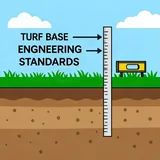
None of these lines is decoration, and all of them are cheap to ask for before the work starts and expensive to add afterwards. The two that move a quote most are the excavation depth and the aggregate: 2 to 3 inches is published as acceptable for a light-traffic residential lawn with no dogs, while a pet yard is a 4-inch minimum and up to 6 inches in heavy clay, so the….
who does artificial turf near me in Phoenix?+
Installed artificial turf is published at 8 to 15 per square foot, and a typical 500 square foot backyard is published at 4,000 to 7,500. A complete professional installation is budgeted at 5 to 15 per square foot, and the published models compute a standard 500 square foot project at 4,970 (9.94 per square foot) against 6,827 (13.65 per square foot) for a fully engineered pet-proof system. For comparison, natural grass is published at 0.50 to 2 per square foot for seed or sod upfront and xeriscape at 3 to 8 per square foot installed.
dense graded vs open graded - which one should i choose?+
They differ in cost, lifespan and how much of the existing structure survives the job. The published comparison on this site sets out the ranges side by side, and the right answer depends on what you are trying to preserve - ask for both options priced on the same scope before deciding.
what else should i know about artificial turf in Phoenix?+
The short answer depends on your property and the quotes you receive. A matched pro can confirm it in the free estimate, and everything you compare should be in writing so the choice is like-for-like.
Ready to Get Started?

Free estimates from trusted Phoenix artificial turf installers.